
Natural Breast Augmentation Results: Clinical Determining Factors
Natural Breast Augmentation Results: Clinical Determining Factors
The demand for breast augmentation with natural and proportionate results is one of the most frequent clinical objectives in breast augmentation surgery. However, achieving this naturalness is not a matter of chance or the exclusive choice of implant size: it depends on a rigorous anatomical assessment, the proper selection of the surgical technique and individualized preoperative planning.
In this article, Mallorca Medical Group’ s medical team reviews the main clinical factors that influence the aesthetic results of breast augmentation, with the aim of providing the reader with an informed and evidence-based perspective.
1. What defines a natural result in breast augmentation surgery?
In the field of cosmetic surgery in Mallorca, the concept of “natural result” has evolved considerably in recent years. Two decades ago, the prevailing aesthetic ideal tended towards high volumes and very projected shapes. Nowadays, the clinical consensus is oriented towards a different standard: the breast should look harmonious in proportion to the patient’s body, with a shape that integrates with the pre-existing thoracic morphology.
From a technical perspective, a natural result implies:
- A smooth upper pole, without the spherical or domed appearance that betrays the presence of an excessively oversized implant.
- A well-defined but not artificially elevated inframammary fold.
- A smooth transition between the native breast tissue and the implant, especially at the upper pole.
- Symmetry with respect to the thorax and the morphology of the patient’s waist and hips.
- A result that remains stable over time, adapting to normal body changes without visible deformation.
Achieving these objectives requires an individualized anatomical assessment, which cannot be replaced with generic implant size tables or with decisions made exclusively on the basis of reference photographs.
2. Starting anatomy: the most decisive factor
Preoperative breast anatomy is by far the most important determinant of the final result. Two patients requesting the same size implant may obtain very different results if their anatomical features differ. Among the parameters that the plastic surgeon should evaluate in consultation are:
2.1. Breast Base Width (BWD)
The measurement of the base width diameter (BWD) or breast base diameter is fundamental to select the correct implant width. An implant that is too wide for the patient’s thoracic base will generate an unrealistic effect in the lateral pole, with exaggerated protrusion beyond the natural contour of the thorax.
2.2. Nipple to Inframammary Fold Distance (N-IMF)
This distance directly conditions the implantable volume without compromising the position of the nipple-areola complex. A short N-IMF limits the maximum implant size in certain placement planes.
2.3. Degree of Breast Ptosis
In cases with mild or moderate ptosis, an implant alone may not be sufficient to correct the nipple position. Evaluation of the degree of ptosis using the Regnault classification allows the surgeon to determine whether simultaneous or delayed mastopexy is required.
2.4. Thickness of Glandular and Subcutaneous Tissue
Patients with little native breast tissue are at greater risk for the implant to be palpable or visible, especially in the upper pole. In these cases, submuscular or dual-plane placement can improve coverage and thus the natural appearance of the result.
2.5. Pre-existing Asymmetries
Breast asymmetry is frequent and should be detected and quantified preoperatively. The use of implants of different volume or projection in each hemithorax is a common strategy to compensate for these anatomical differences.
Clinical Note: In Mallorca Medical Group’s preoperative assessment, a complete biometric measurement including all of the above parameters is performed, complemented by standardized photography and, when appropriate, image analysis assisted by simulation software.
3. Selection of the implant: volume, shape and texture.
The choice of breast implant is a direct consequence of the anatomical assessment, not its starting point. Three main variables are involved in this decision:
3.1. Volume (cc)
The volume is selected according to BWD, N-IMF and available native tissue, not according to the desired bra size. The latter is an indicative reference, but not a surgical parameter. The surgeon will calculate the volume range that, given the chosen plane of placement, will produce a natural morphology for that particular patient.
3.2. Shape: Round vs. Anatomical
Round implants offer greater central projection and are especially appropriate when upper pole volume is sought. Anatomical (teardrop-shaped) implants reproduce the natural slope of the breast and may be preferable in patients with little native tissue or seeking a more discreet-looking result.
The choice between the two shapes does not respond to a universal preference, but to the anatomical characteristics and the esthetic objective of each case. Both shapes can produce natural results when correctly selected.
3.3. Gel Texture and Cohesiveness
High cohesive gel implants maintain better shape over time and reduce the risk of implant folding or visibility in thin tissues. The surface (smooth, microtextured or macrotextured) influences the behavior of the implant in relation to the peri-implant capsule and should be considered in the context of each patient’s individual risk.
4. The implant placement plane
The anatomical position in which the implant is placed in relation to the pectoralis major muscle is one of the factors that most influences the final appearance of the result. There are three main positioning planes:
4.1. Subglandular (Above the Muscle)
The implant is placed between the mammary gland and the pectoralis major muscle. It offers a generally faster recovery and less postoperative pain. It is suitable in patients with sufficient native breast tissue to cover the upper pole of the implant. However, it carries a higher risk of visibility in thin patients or those with moderate ptosis.
4.2. Submuscular or Total Subpectoral
The implant lies under the entire pectoralis major muscle. It provides greater coverage in the upper pole and reduces the visibility of the implant, especially in patients with scarce tissue. Recovery may be longer and there is a risk of implant animation with muscle contraction.
4.3. Dual-Plane
It is currently the most used plane in breast augmentation surgery, especially in patients with mild ptosis or scarce native tissue in the upper pole. The implant is partially covered by the muscle in the upper portion and in direct contact with the gland in the lower portion. It combines the advantages of the previous planes and is especially useful for achieving a smooth upper pole with good central projection.
Clinical perspective: The choice of plane should not be generalized. At Mallorca Medical Group, the decision is made on a case-by-case basis, taking into account the thickness of the tissue, the degree of ptosis and the patient’s aesthetic goals. There is no universally superior plane; each option has its specific indications.
5. The surgical access route
The incision through which the implant is inserted also conditions the final result, mainly in relation to the scar and the precision of the implant pocket dissection. The most frequent access routes are:
- Inframammary sulcus (IMF): It is the route that allows greater surgical control in the creation of the pocket. The scar is hidden in the natural fold of the breast. It is the preferred approach in most of the reference protocols.
- Periareolar: The incision surrounds the inferior border of the areola. It is adequate when the areola has a sufficient diameter and allows direct access to the glandular tissue. It requires a precise technique to avoid alterations in the sensitivity of the nipple.
- Axillary: Offers the advantage of not leaving a scar on the breast. Requires specific instrumentation and experience in this approach. Control over the pocket is less compared to the inframammary route.
The selection of the access route is based on the anatomical characteristics of the patient, her previous surgical history and the surgeon’s technical preferences, always with the aim of minimizing visible marks and maximizing surgical precision.
6. Digital planning and preoperative simulation
3D digital simulation systems have provided a valuable tool for communication between the surgeon and the patient. They allow different volume and implant scenarios to be visualized prior to surgery, facilitating the alignment of expectations between both parties.
However, it is important to understand the limitations of these systems:
- The digital simulation provides a visual approximation, not an exact prediction of the final result.
- The real behavior of breast tissue, its elasticity and postoperative evolution cannot be faithfully replicated in any software.
- Simulation is more useful as a communication tool than as a guarantee of results.
In Mallorca Medical Group’s clinical practice, preoperative simulation is complemented by biometric assessment and the surgeon’s clinical experience to define the definitive surgical plan.
7. Recovery and evolution of the result
The final result of breast augmentation is not immediately visible after surgery. The postoperative evolution process has several phases that the patient should be aware of:
7.1. First Weeks: Inflammatory Phase
During the first 15-30 days, the breast presents edema and the implant may appear too high or excessively projected. This is a normal stage of the healing process.
7.2. First and Second Month: Implant Descent
The implant takes its final position as the tissues relax and the peri-implant capsule is formed. This process is usually called “dropping” of the implant and can last from 4 to 12 weeks.
7.3. Between the Third and Sixth Month: Stabilized Result
After the third month, the result begins to stabilize. Most patients can evaluate the definitive result after the sixth month, when the residual edema has disappeared and the tissues have adapted to the implant.
7.4. Specific Care to Promote a Natural Result
- Use of specific post-surgical bra according to the surgeon’s indications.
- Breast massage in indicated cases, to favor the descent of the implant.
- Avoid impact exercise during the first weeks.
- Scar control with silicone products after complete healing.
- Periodic check-ups to monitor the evolution and detect any complication at an early stage.
8. Ideal candidate for breast augmentation with natural results.
Not every patient who desires breast augmentation is a candidate for highly natural-looking results with any implant. Individualized assessment allows us to identify the profile of the ideal candidate and define a realistic surgical plan. The most favorable profiles include:
- Patients with symmetrical breast anatomy or with mild asymmetry compensable with implants of different volume.
- Patients with sufficient native breast tissue to adequately cover the upper pole of the implant.
- Patients requesting a moderate augmentation proportional to their thoracic morphology.
- Patients with realistic expectations, understanding of the recovery process and willingness to follow the postoperative protocol.
- Patients without a history of breast radiotherapy or previous surgery that has significantly compromised tissue vascularization.
In patients with significant breast ptosis, with scarce native tissue or with marked asymmetries, a combination of techniques (mastopexy with implant, implants of different specification) may be required to achieve a harmonious result. The surgeon will evaluate each case and propose the most appropriate plan.
9. Frequently Asked Questions
Does the size of the implant determine whether the result will be natural?
Not exclusively. A moderate volume implant can produce an unnatural result if it does not correspond to the patient’s breast base. Conversely, a larger implant may look natural if the patient’s anatomy allows it and the plane of placement is correct. The naturalness of the result depends on the adequacy of all clinical factors, not only the volume.
Do anatomical implants give more natural results than round implants?
It depends on the case. Anatomical implants reproduce the natural slope of the breast and may be preferable in certain anatomical profiles. However, round implants, correctly selected, also produce results of high naturalness. The shape of the implant is not the only determinant.
How long does the result of breast augmentation last?
Current high cohesive implants have excellent clinical durability. However, they are not permanent devices and may require revision or replacement throughout the patient’s life, especially if there are significant changes in weight, pregnancy or changes in the peri-implant capsule. Periodic check-ups with the surgeon are essential to monitor the condition of the implants.
Can pregnancy affect the outcome of breast augmentation?
The changes that occur in the breast during pregnancy and lactation (increase in glandular volume and subsequent involution) may modify the aesthetic result of the augmentation. In patients planning pregnancies in the short term, the surgeon may recommend deferring the procedure or planning it with this factor in consideration.
Does breast surgery interfere with breastfeeding?
In most cases, breast augmentation surgery does not affect the ability to breastfeed, especially when the approach is inframammary and not periareolar. However, this aspect should be assessed individually and discussed during the preoperative consultation.
When can I evaluate the final result?
The result can be evaluated approximately after the third month, when the implant has completed its descent and the postoperative edema has mostly subsided. The definitive result is considered stabilized approximately six months after the intervention.
10. Request an evaluation at Mallorca Medical Group
Obtaining natural and proportionate results in breast augmentation surgery requires an individualized surgical plan, based on a rigorous anatomical assessment and the surgeon’s clinical experience.
Dr. García Ceballos FCCP, a specialist in Plastic, Reconstructive, and Aesthetic Surgery with training at UZ VUB in Brussels and over 25 years of clinical practice, attends to his patients in Palma de Mallorca, within the framework of the Trusted Plastic Surgery Clinics in Spain.
The consultation at Mallorca Medical Group includes a biometric anatomical assessment, analysis of implant options and preoperative planning, aimed at defining the most appropriate surgical plan for each patient’s characteristics.
Request your personalized assessment with Dr. García Ceballos
Book your appointment at mallorcamedicalgroup.com
You can also contact us by phone: 971 254 686
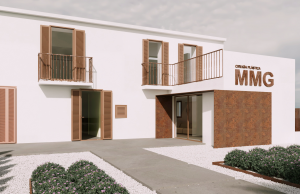
Mallorca Medical Group – Camí Vileta 46C – 07011 Palma de Mallorca